“Joanna Gaines is my spirit animal.”
Curiously, you can buy various paraphernalia that boasts this phrase from boutique-y vendors scattered across the Internet. Spirit animal, you say? I thought that woman was… well, a woman. What true significance do spirit animals hold, anyhow? Are they like J.K. Rowling’s patronuses, beings that can be conjured for wisdom and protection against dementors?[1] Are they guides sent down by the divine to counsel and direct us? Are they millennial inventions designed with the singular purpose of keeping BuzzFeed in business via one of its many—irrelevant—quiz schemas[2]? Lord[3] only knows, but the decidedly honorary, perhaps even reverent sentiment certainly serves as a testament to the prolific hubbub surrounding that which is Chip and Joanna Gaines.
While I wouldn’t go so far as to call Joanna Gaines my “spirit animal,[4]” her work and achievements certainly serve as a form of inspiration and creativity. While their business has since evolved into an entity in and of itself, Chip and Jo got their start on HGTV’s Fixer Upper, a show whose title aptly embodies the can-do mentality and American Dream spirit the Gaines family consistently pours into each of its projects.
Notably, to “fix” something does not suggest razing it to the ground and starting from scratch; rather, it involves the meticulous care and attention required to breathe new life and potential into something with a pre-existing story. One thing I particularly admire about Joanna is her innate ability to look at something unremarkable—typically that which is rusting, broken, or has been otherwise discarded—and imagine the possibility of what could be. Joanna doesn’t restore furniture and homes so much as she renders them whole—uncovering their character, celebrating their beauty, and extending the opportunity to continue their story.
If you know Chip and Jo, then you know their love for the word “character[5]:” They look for homes, furniture, and decorative items teeming with small, unique, imperfect details that define a piece and give it personality, or “character” if you will. Chip and Jo have an incredible eye for design and a penchant for repurposing items to give them new function and an unexpectedly charming aesthetic. It is this character that defines their work and sets it apart as something special, handiwork that pulses with charisma and vivacity from the past.
This approach speaks to me on a plurality of levels. First, I am, and forever will be, an English major: Stories are in my blood, and I look for them wherever I go. Nothing pleases me as much as a strong narrative, and I strive to realize the voice and potential of the people, ideas, and objects that surround me.
Second, I have a borderline obsession with chasing down a good deal[6]. Certainly I enjoy nice things, but nice things magically become extra “nice” when they come as a steal. There is something to be said for Chip and Joanna’s method of purchasing low-cost homes and products and then revitalizing these goods so they look like a million bucks: The satisfaction of a well-found bargain becomes, perhaps, even more attractive than the item itself.
Lastly, and perhaps most importantly, there is nothing I love better than a good challenge: I thrive in situations where I can think creatively, deconstruct the pieces of a seemingly impossible puzzle, and unlock the hidden potential of any quagmire or conundrum.
It was with this stroke of inspiration that Cam and I decided to finally “fix up” our secondhand entryway table. As noted in my pervious post, “When Life Gives You Winter, Paint “Cerulean” Blue Skies,” we found this table at Golden Valley’s hottest club our favorite local thrift store, Empty the Nest, for next to nothing. We saw its potential while perusing the store on a crisp fall morning and, inspired by the Gaines’ “can-do” mentality, purchased the piece with the intention of trying our hands at the refurbishing game. Yes, the table was nicked, wobbly, and worn, but it had “character,” and we were sold.
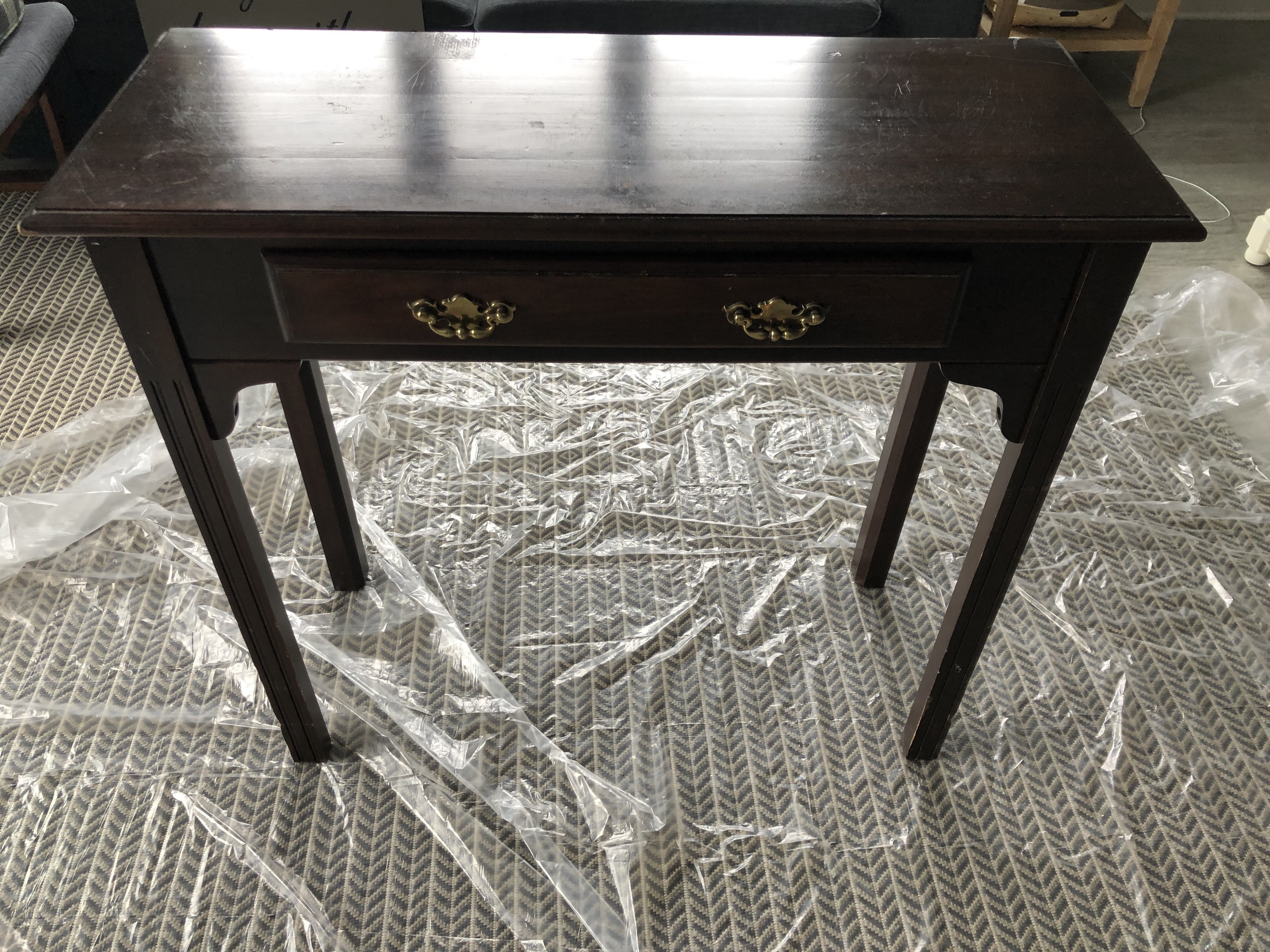
Since purchasing this piece we have been waiting for the right opportunity to enact our desired metamorphosis. A recent rainy weekend proved itself the perfect occasion for such an endeavor, and we promptly crafted a plan and assembled the supplies required to transform our would-be lemon into crisp, tangy lemonade.
Our plans weren’t definitive, but we knew we wanted to experiment with lightening the table. Yet, were also enthralled by the rich mahogany color authentic to the original piece, and we wanted to purposely enhance this preexisting facet of the table’s character while simultaneously evoking new pop and pizzazz.
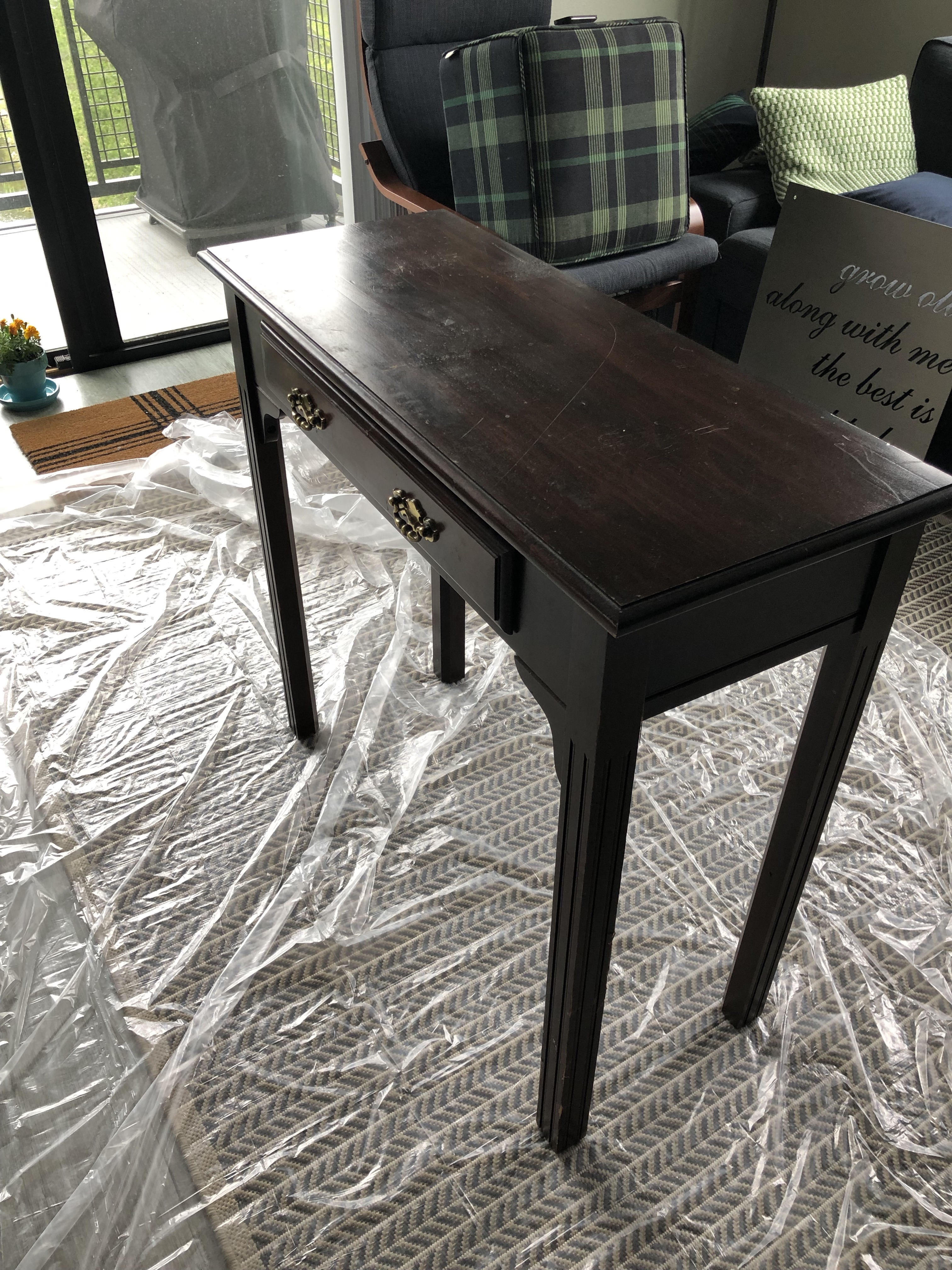
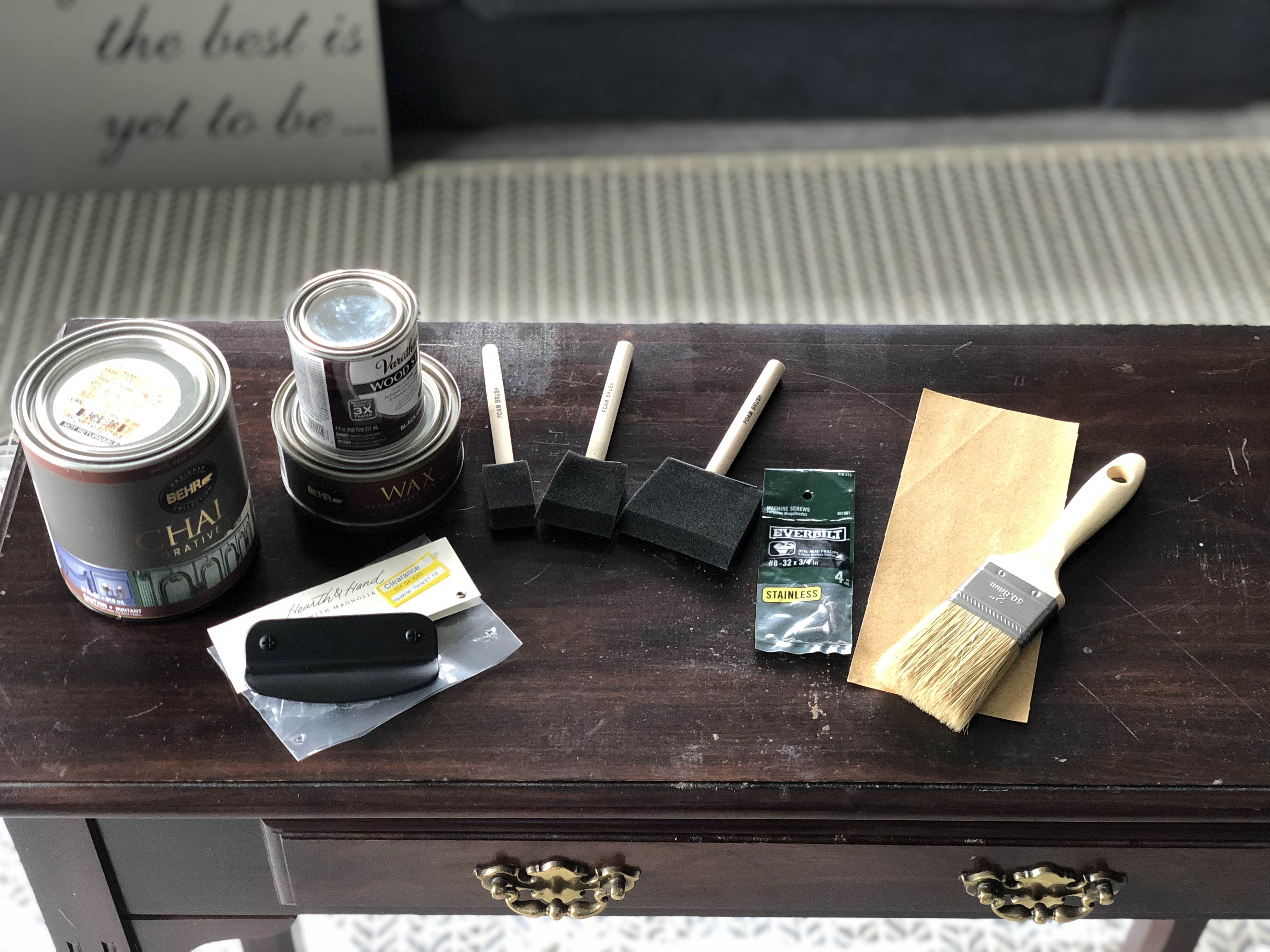
As a result, we decided to re-stain the table top with as close a finish to the original wood as we could find and paint the legs and underbelly with white chalk paint. I had already stumbled upon Magnolia-themed farmhouse style drawer pulls that were on sale at—you guessed it!—Target and had intentionally purchased for this project. With this in mind, our trip to Home Depot included the following purchases:
- Foam paint brushes
- Varathane wood stain (“Black Cherry” to be precise)
- Behr chalk decorative paint (in “Farmhouse White”)
- Behr decorative finish wax
- Sandpaper
- Stain brush
- Oval head Phillips screws (for the new drawer pulls)
- Drop cloth[7]
Supplies in hand, we headed home, cracked the beers, powered up the speakers, and promptly began working on our Chip and Jo-themed weekend project.
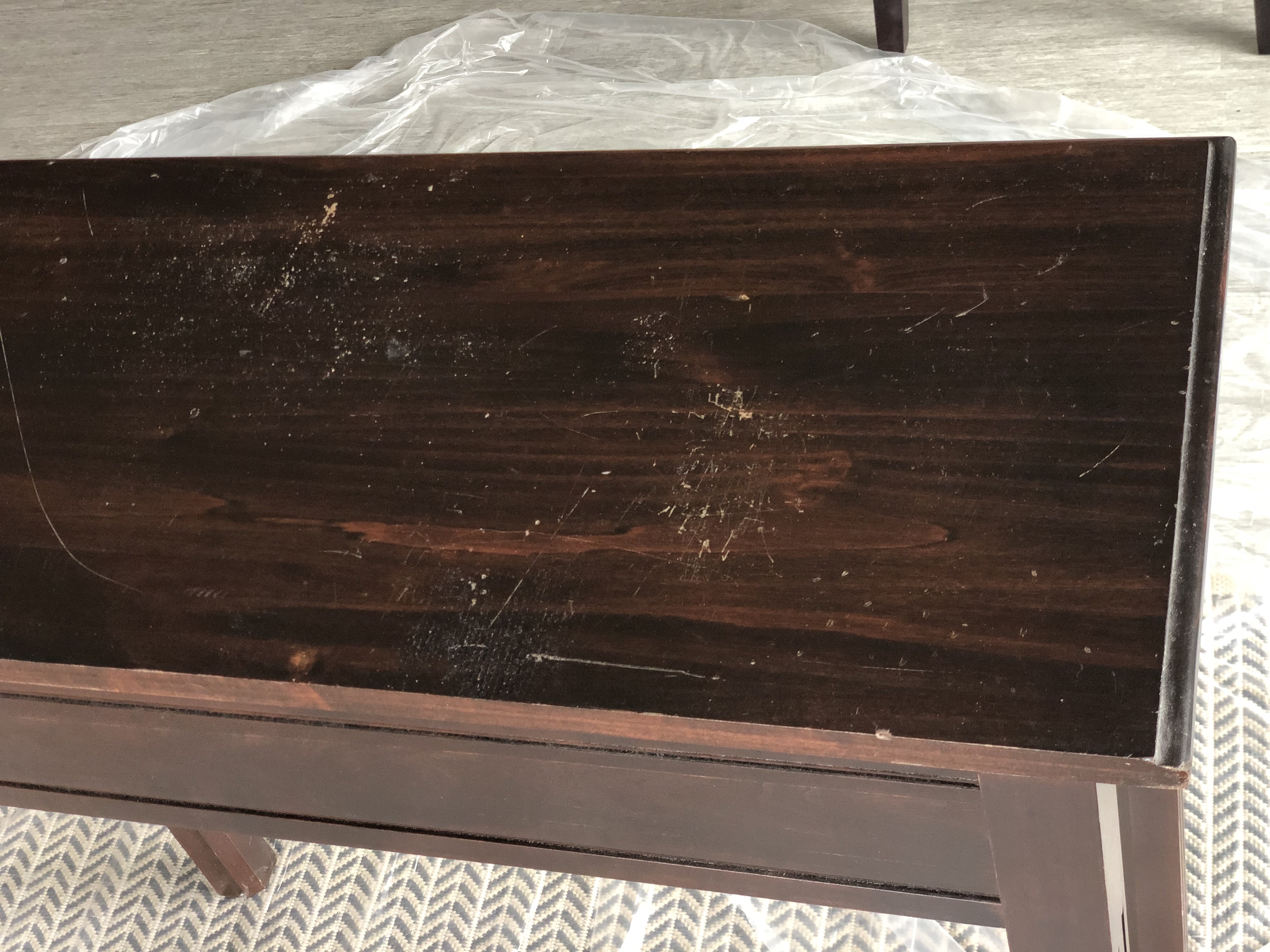
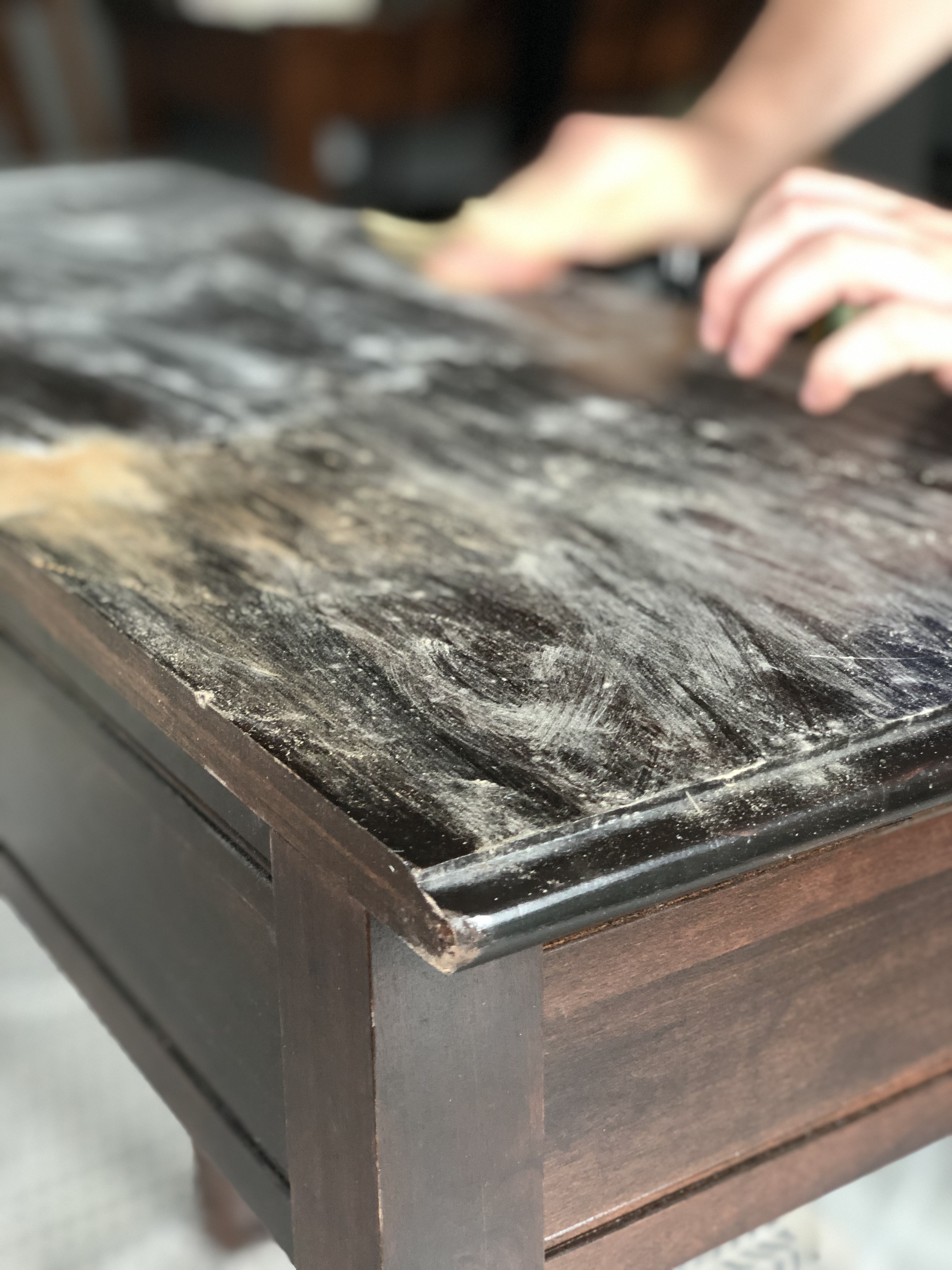
We began by carefully sanding the tabletop to remove inconsistencies and bumps that had formed with time and wear.
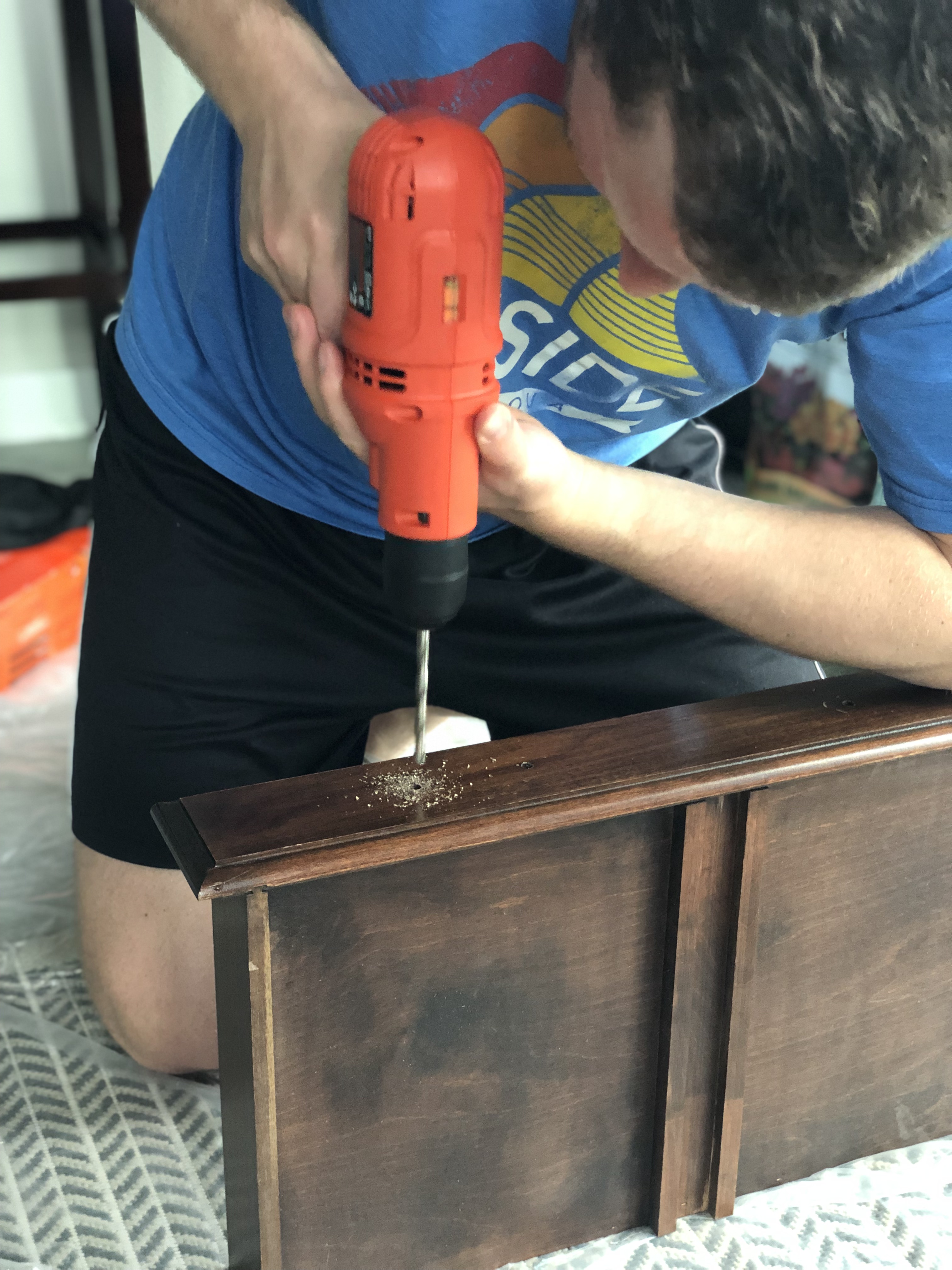
 Once we finished sanding, we wiped away any remaining dust and debris and carefully organized our supplies. We sized up our new industrial drawer pulls, made the proper measurements, and drilled new holes to accommodate the hardware I thought would add the perfect touch to our soon-to-be completed project.
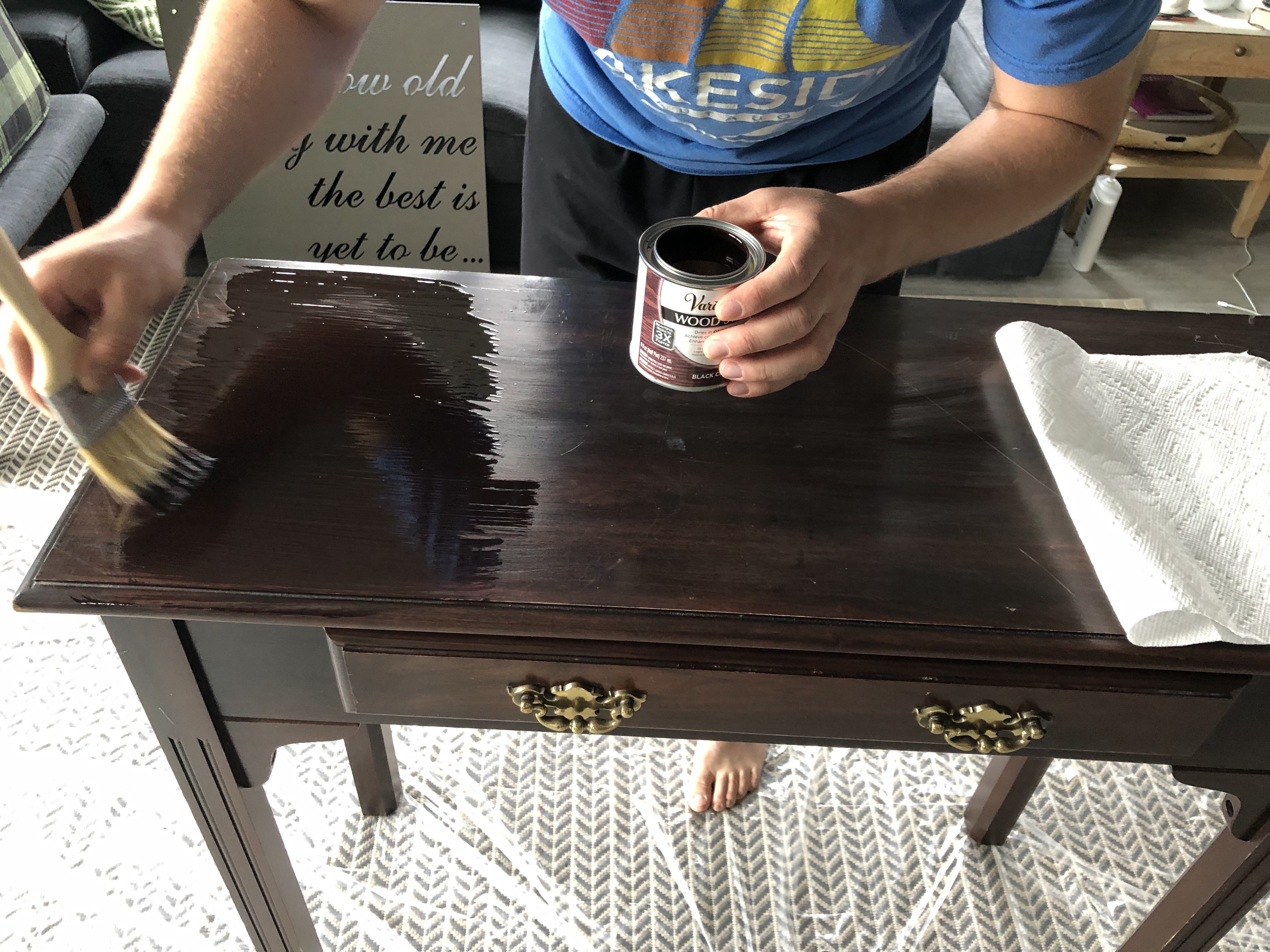
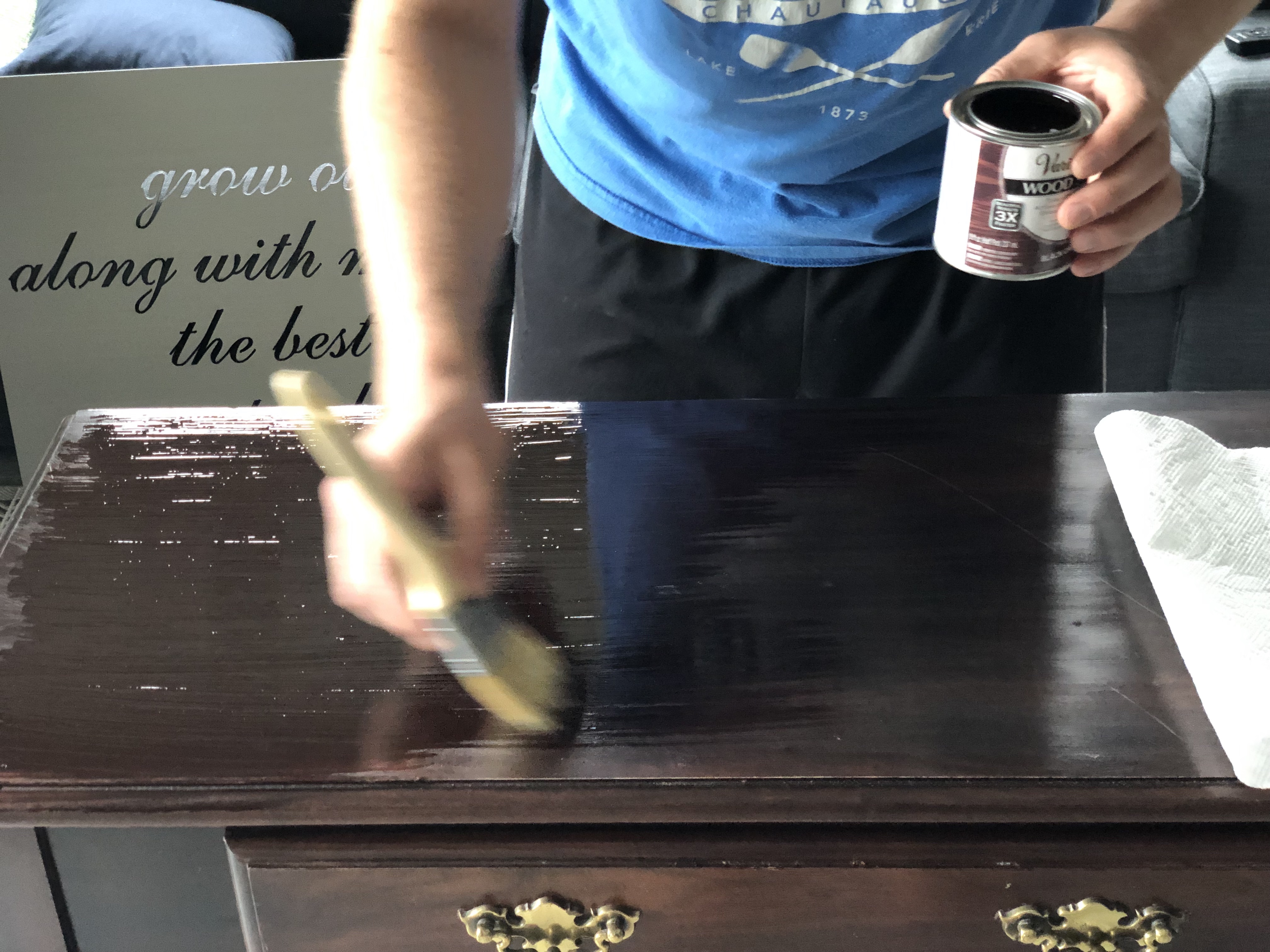
Eager to progress to the next step, we opened the can of stain and began coating the top of the table with a generous layer of “Black Cherry.” We were immediately impressed by the refreshed gloss and pop of color this stain added to an already beautiful piece of wood. Soon, our apartment was rank with the alluring stench of toxic chemicals rich mahogany[8].
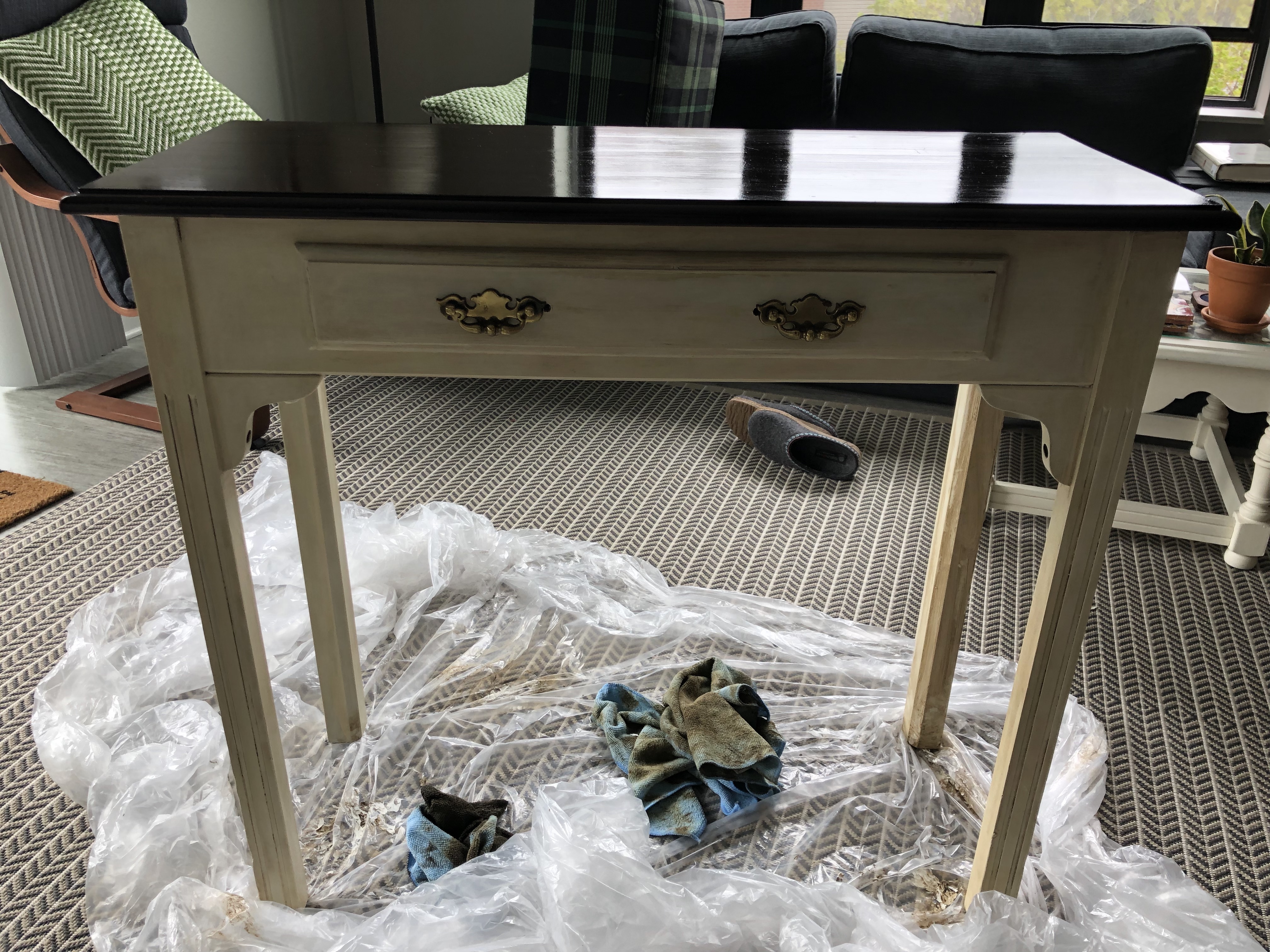
Once the stain thoroughly dried[9] we cracked open the can of chalk paint and went to work on the base. Using foam brushes, we actually read the instructions this time and applied generous helpings of “Farmhouse White” on the table’s legs and underbelly. The table required three or four coats in order to properly mask the dark color of the original wood.
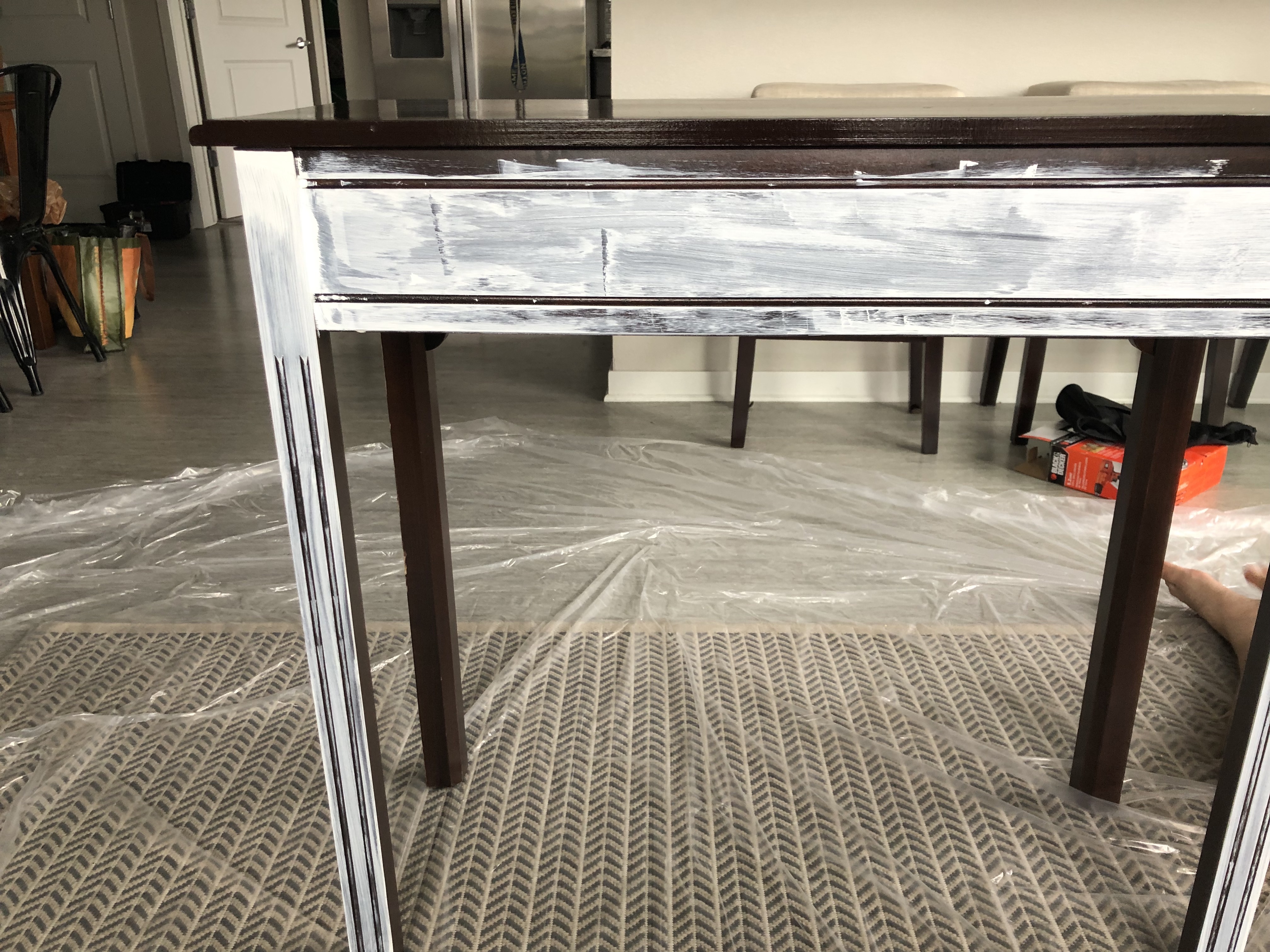
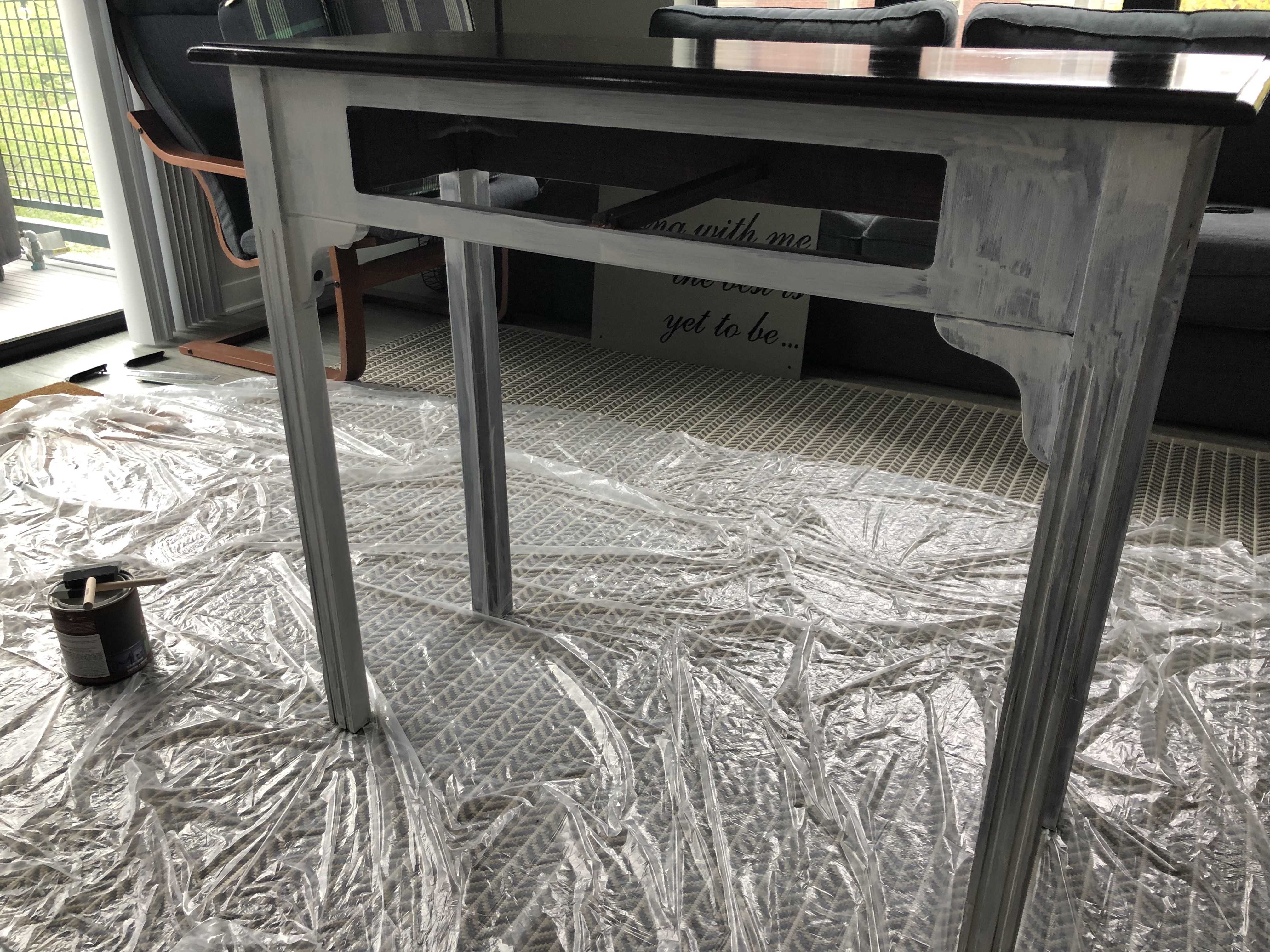
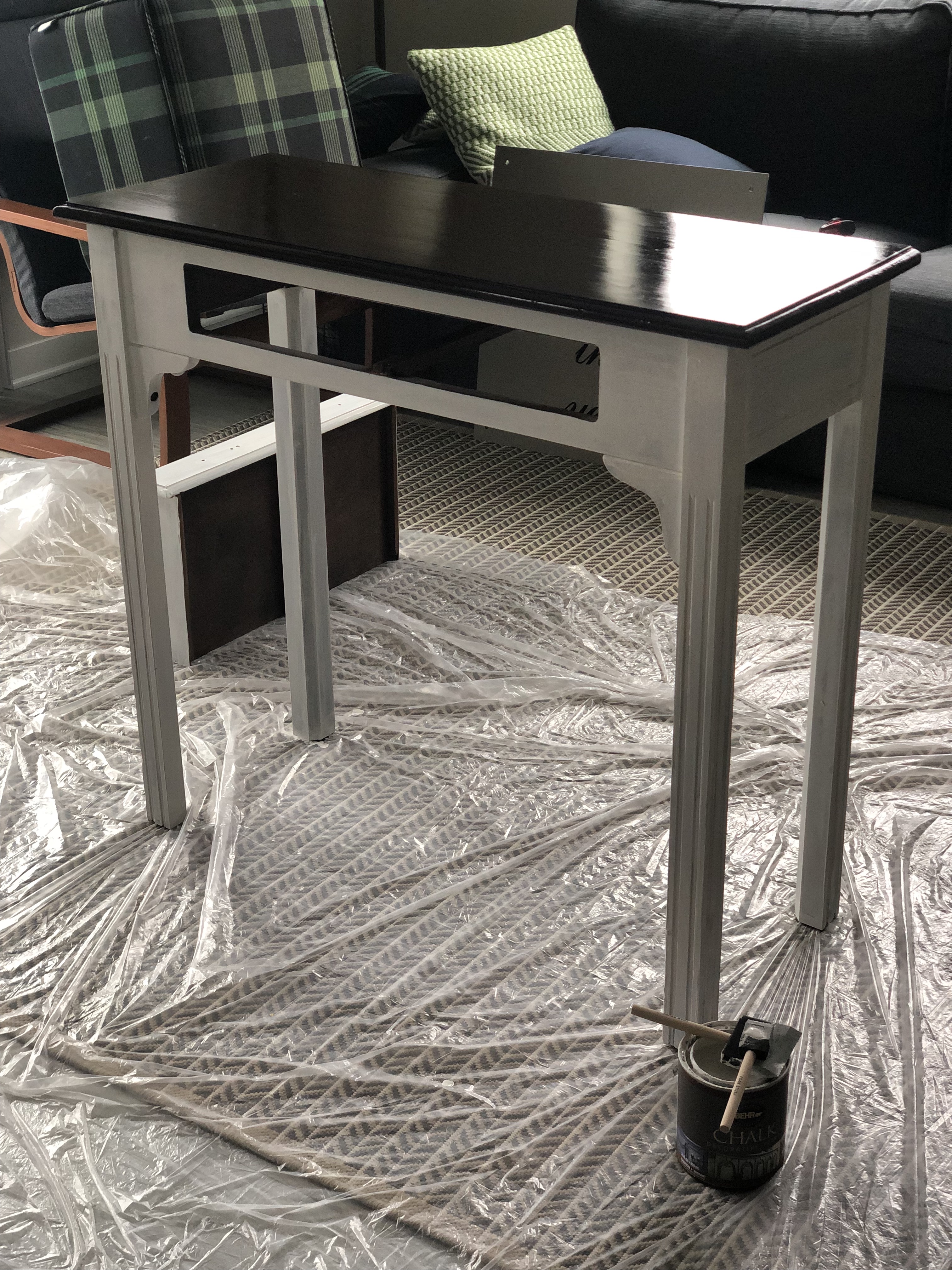
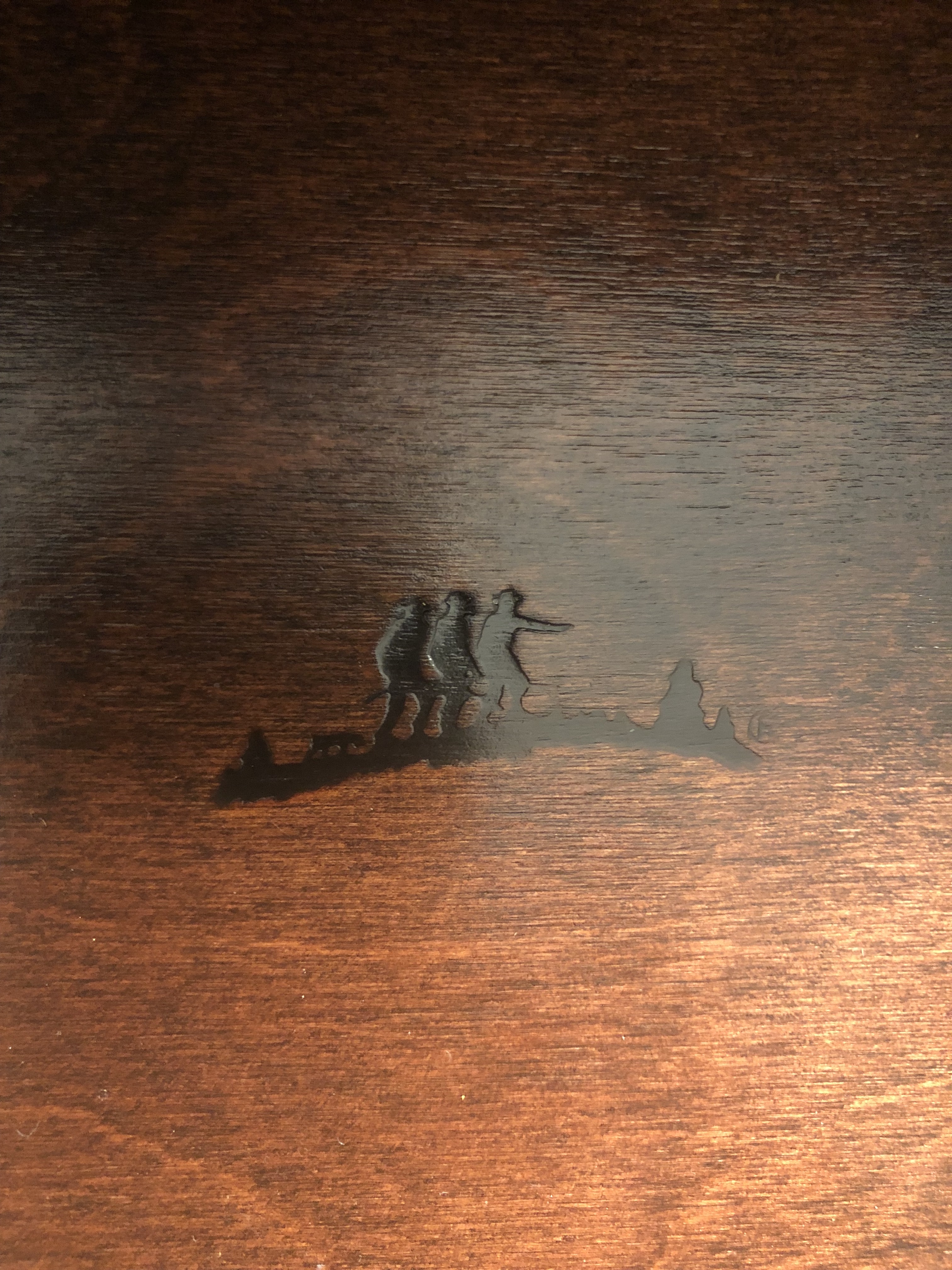
In our process, we were happy to stumble upon an unexpected whisper from the past—a tiny insignia depicting three trekkers and their dog in the woods, presumably imprinted by the original furniture maker. And what did we conclude upon this discovery? Character! Soon we sat quite literally watching paint dry, pleased with ourselves for the small feat we had just accomplished and reveling in the unexpected surprises of our creative process.
Once the chalk paint dried completely we decided to tackle the wax component of the makeover process. When applied to chalk paint, Behr decorative wax adds a classic, antique look that—dare I say it—easily adds character to any time-worn piece. Learning from the errors of our past, we wisely decided to actually read the instructions for this product; in fact, we even watched a few YouTube videos just to play it safe! We both cringed with intimidation as Cam took a clean rag and smeared brown goop on the pristine white table we had worked so hard to perfectly coat. Had we made a grave mistake? Racked with cognitive dissonance, we couldn’t help but wonder if we had erred a step too far in our creative process by besmirching our pure white table with a layer of what can only be appropriately described as feces.
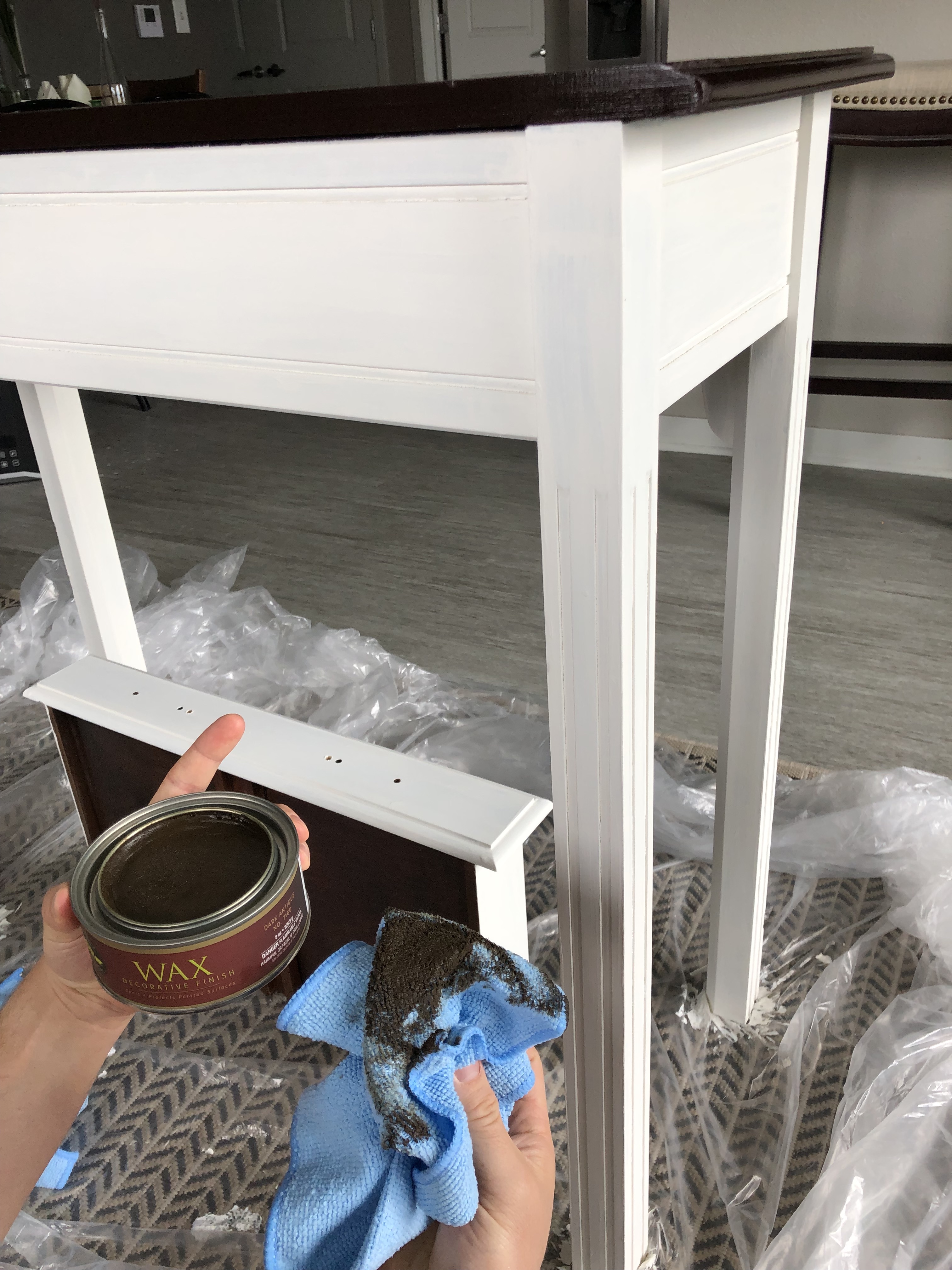
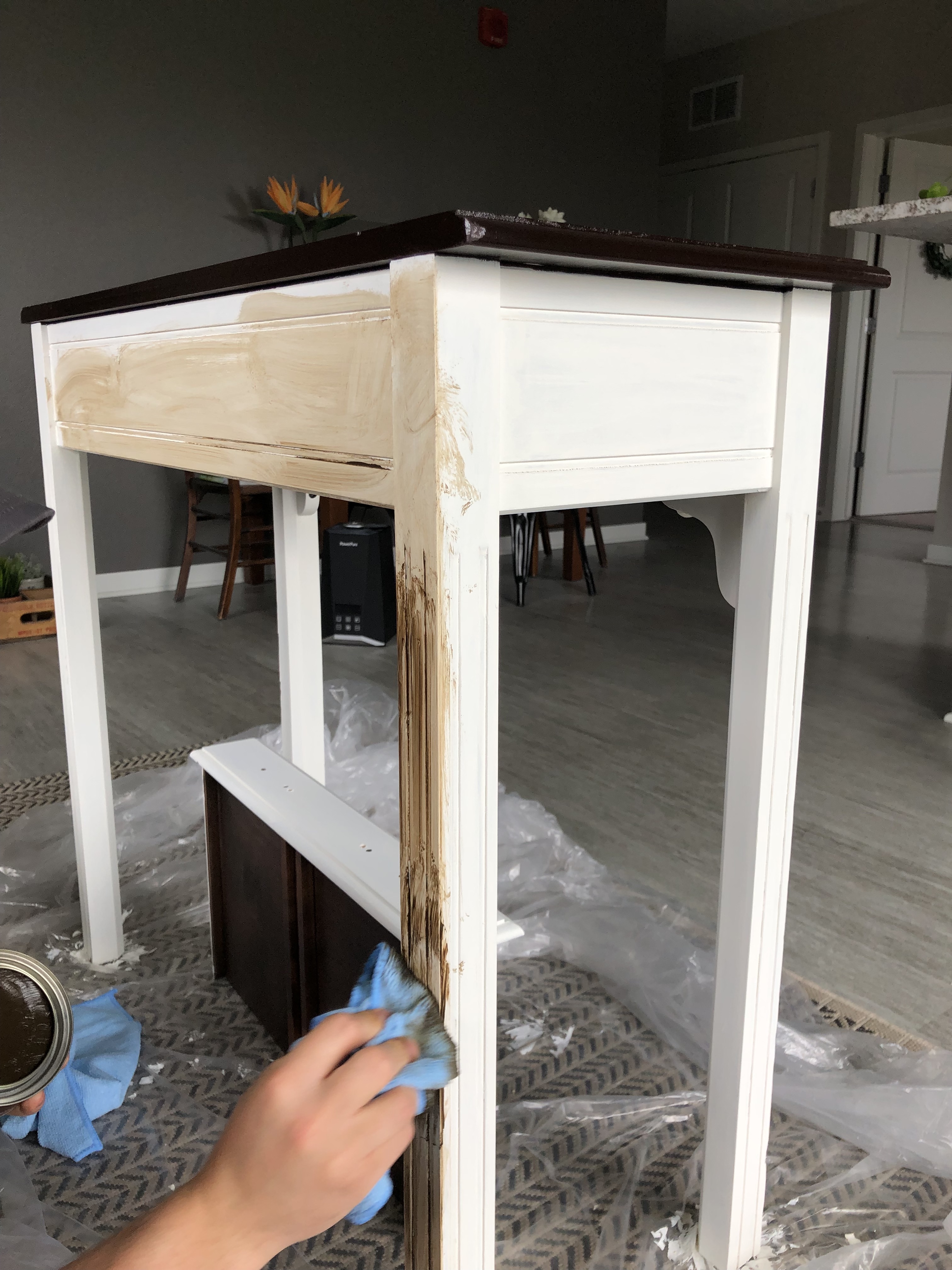
Despite our qualms, we let the wax soak in for a few minutes before we began the buffing process. Little did we know how much energy we would need to exert to properly apply the wax, and, despite the seeming impossibility of this task, we worked vigorously to buff the wax out of fear of marring our beautiful table forever.
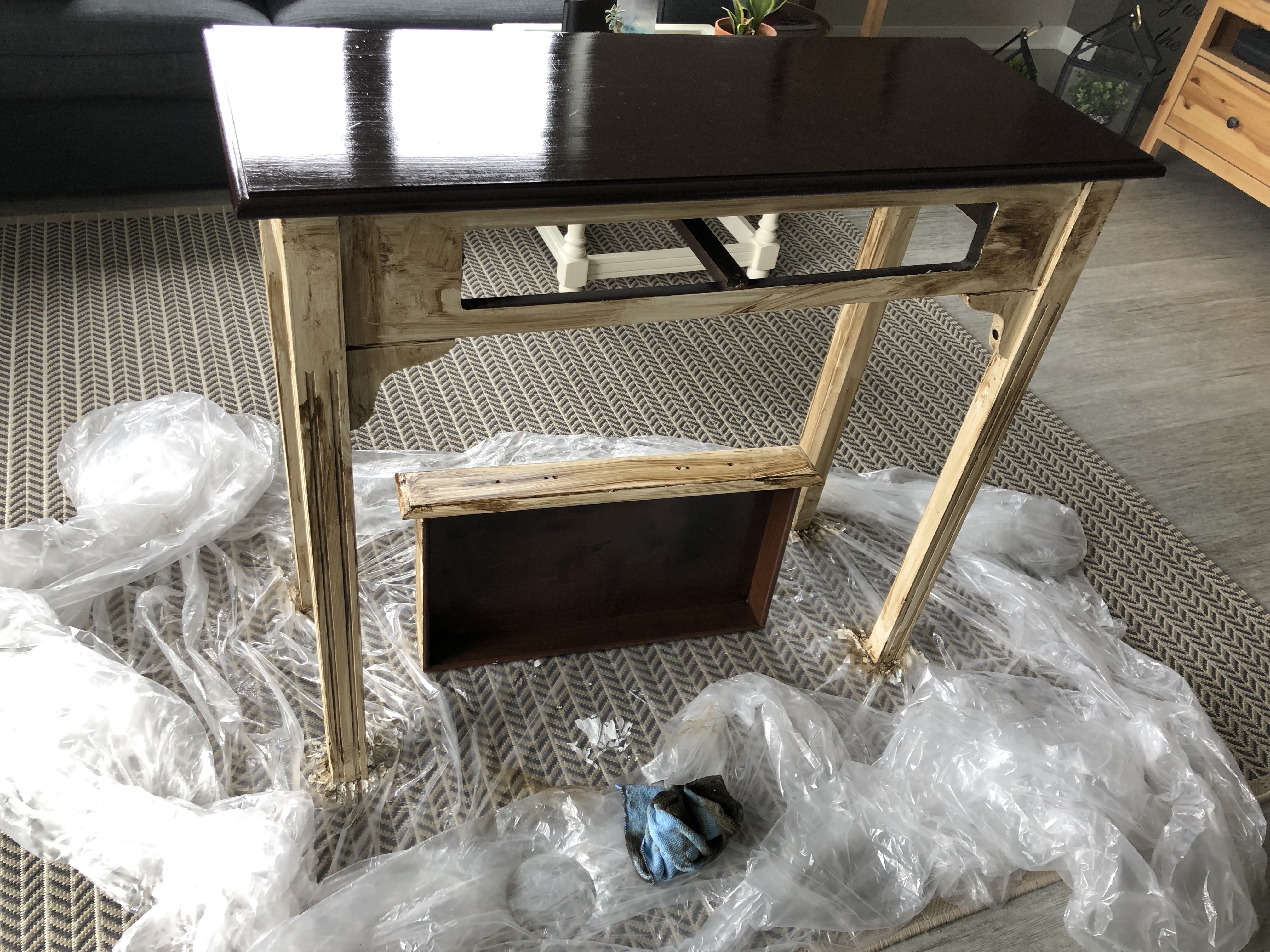
The buffing took time—and several well-deserved breaks—and, if we are being honest, we still have our fair share of buffing to do. Once we achieved our desired effect, we put down our rags and fastened the new drawer pulls, eager to complete this final step so we could admire the complete transformation. I loved these drawer pulls—there was a unassuming simplicity in their crisp lines and dark matte industrial finish—and I could not wait to finalize our project. With a few simple twists of the screwdriver, the new pulls were installed only to reveal…
A grave mistake.
The drawer pulls looked terrible, bruised black blobs awkwardly hanging from the drawer like sad, droopy eyes. They looked oversized, out of place, and nothing like what I had envisioned. We didn’t have alternate pulls. We had already drilled the holes. What had we done?
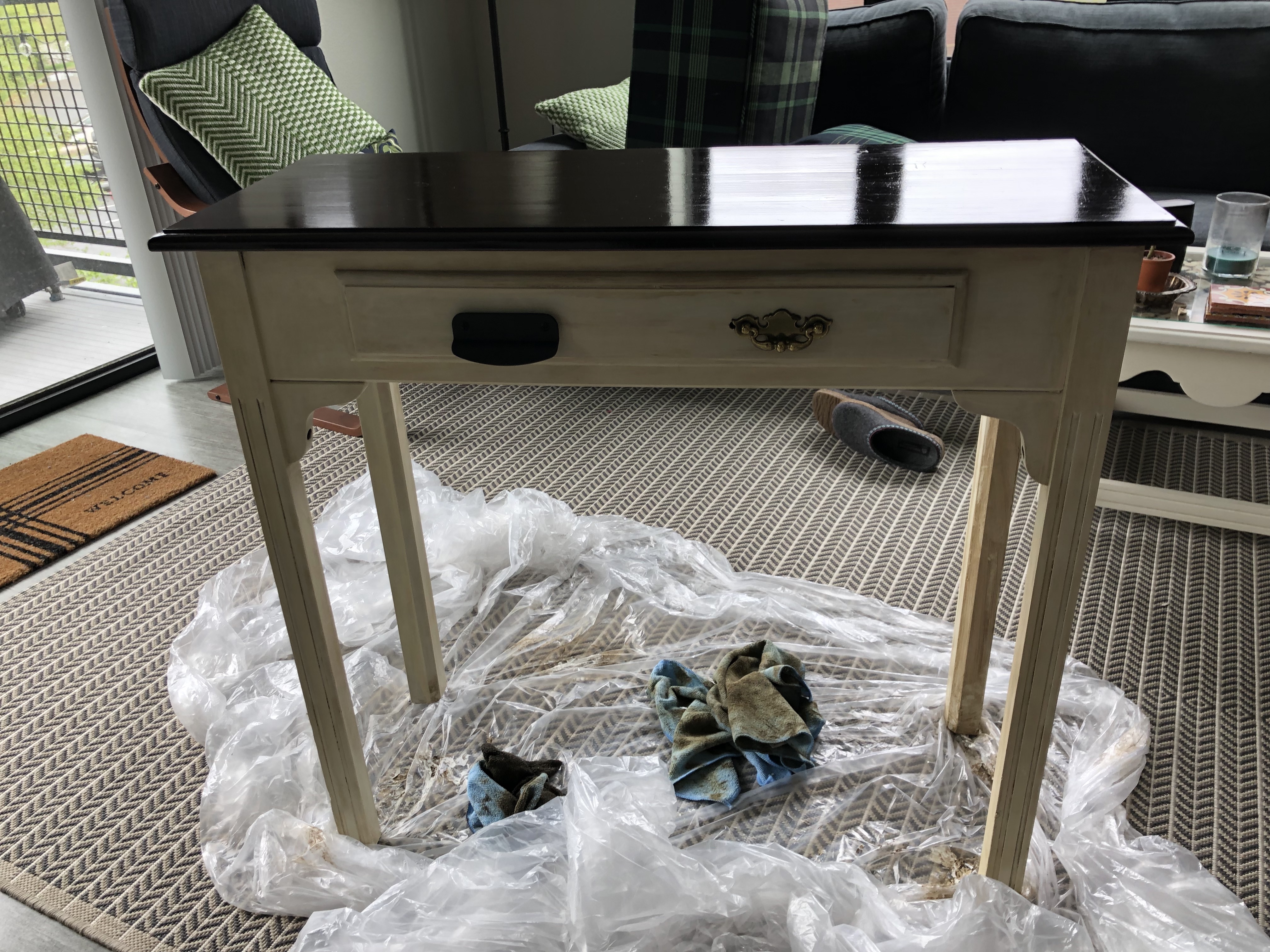
Thinking on our feet, we decided to humor ourselves and try the antique brass-style pulls that came with the original table. We loosened a few screws, tightened a few screws, and were shocked at the simple obviousness of the result: This was how the table was meant to be. The effect was tasteful and cohesive, the tarnished nicks in the brass evoking a strong parallel with the intended antiquing effect of the wax. Enthralled in our “fixing up” process, we had disregarded and overlooked the initial integrity of the piece. In a word, the pulls added character, and we knew this was just the kind of happy accident Chip and Jo might encounter en route to true flipping success.
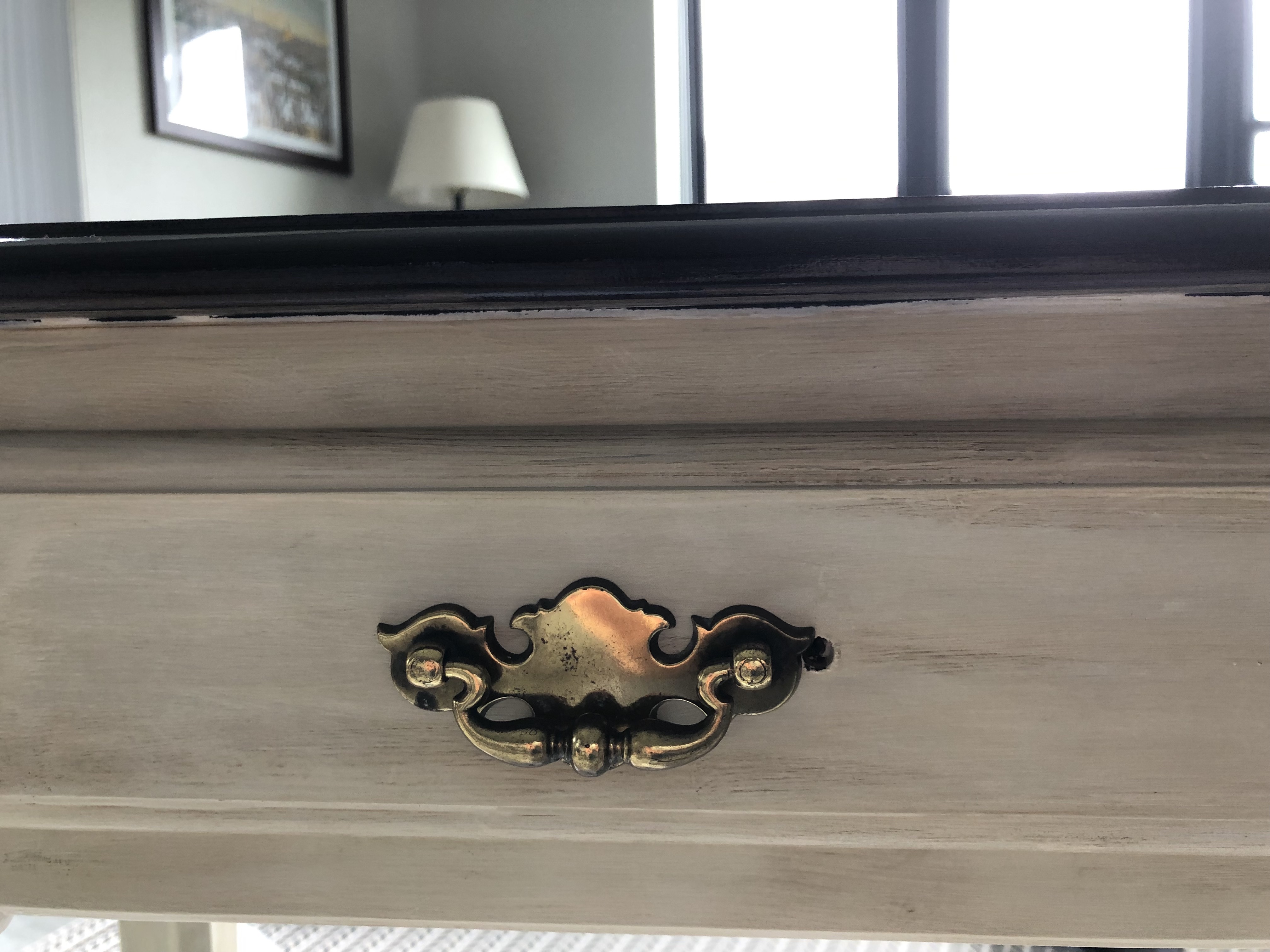
Upon reflection, we made a couple mistakes we could have easily avoided[10]. Yet arguably, these mistakes added additional character to a table already teeming with personality, and we couldn’t have been happier with the outcome.
Will we keep the antique wax finish? Revert to an un-waxed “Farmhouse White?” Continue to experiment with fun new drawer pulls for added flair? Where will paint’s endless possibility take us next?
We don’t know, but we plan to be surprised.
[1] If Joanna could safeguard people from Dementors, that would certainly elevate her and Chip’s Magnolia empire to a whole new level!
[2] What is YOUR spirit animal? Wait no further: Click here and unlock your spirit animal destiny. I am a Honey Badger. Naturally. According to BuzzFeed, According to Buzzfeed: “You get your way, no matter what, because you’re the toughest animal out there. Other people might have feelings, but they don’t concern you in the slightest because you are IN CHARGE. Everyone better bow. You’re the HBIC (Head Badger in Charge).”
[3] And Etsy designers.
[4] Sigh.
[5] And shiplap, barn door, pergola, repurpose, farmhouse sink, and subway tile for that matter. That’s right: I know my Fixer Upper vocab.
[6] Unconvinced? Look no further than my post “Tickle Me Pink” for additional reference.
[7] You know, because paint can be messy.
[8] …and leather-bound books. It was kind of a big deal. Anchorman, anyone? Anyone?
[9] And thoroughly dry it did. In our childish excitement to dip our fingers in the paint and get cracking, we failed to actually read the instructions clearly outlined on the stain can. (That would have been too obvious). If (big if) we would have actually read the directions and proceeded as intended, we would have realized the imperative nature of wiping away the stain in order to achieve the desired effect. Much to our surprise the stain did not dry as we had initially anticipated; indeed, it served more as a wood-like paint than an actual stain and coated the entire tabletop with a reflective glossy coat so shiny you could see your reflection. Little did we know we should have channeled the wisdom of Dwight K. Schrute: “Whenever I’m about to do something, I think: Would an idiot do that? And if they would, I do not do that thing.” Idiot move, Katie and Cam: Idiot move.
[10] See: Not reading instructions, drilling holes in a piece of furniture before making up our minds, etc. As you will see, some caulking is definitely in our future…



Comments are closed.