If your week has been anything like mine, then you’ve been experiencing a whole lot of rain and a shockingly premature cold front. It was still summer last Sunday; I wore shorts and a tank top, spent a comfortable if not slightly warm day at the lake, and needed my sunglasses in order to avoid being blinded by the light. Then Labor Day rolled around, and suddenly I found myself closing all the windows, putting on a pot of tea, and frantically combing through my closet until I found just the right snugly sweater.
What the actual heck[1]?
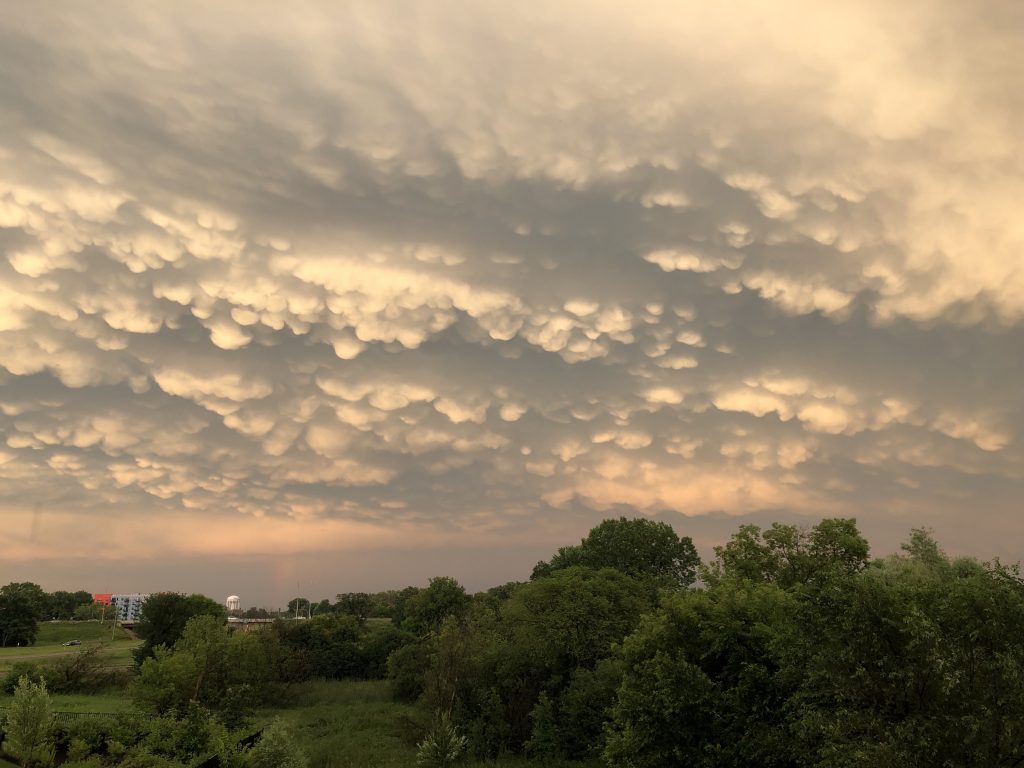
With what seemed a blink of an eye, summer has come and gone and fall has aggressively stepped in like the dark, moody, dramatic step-sister she is. So far this has been a week filled with cold gusts, gray skies, and damp autumn air. The sun has yet to make an appearance, my motivation is dragging its now-slippered feet, and the days are becoming noticeably shorter. In other words, it is easy to feel like this is the beginning of the end.
And yet, here’s the thing: It’s not.
Ladies and gentlemen, winter is most certainly coming, and, regardless of our willingness to accept reality, it will inevitably arrive sooner than we like. However, let’s not fall into a somber pit of hopeless despair. Remember, we are at choice here; while we may not be able to control our external environment, we can control our reaction to these circumstances and therefore possess all the power we truly need.
Some say 2020 has been a year of disappointments, and there are very real, very palpable elements of truth in this. From a raging pandemic to surging violence and glaring examples of racial inequality to a pervasive feeling of mounting uncertainty, this has unequivocally been a challenging year. There is so much we can’t control, so much we may feel powerless to, so many questions with no apparent answers in sight. And yet, there is always the opportunity to see something different. There is always the possibility for a change in perspective. There is always hope.
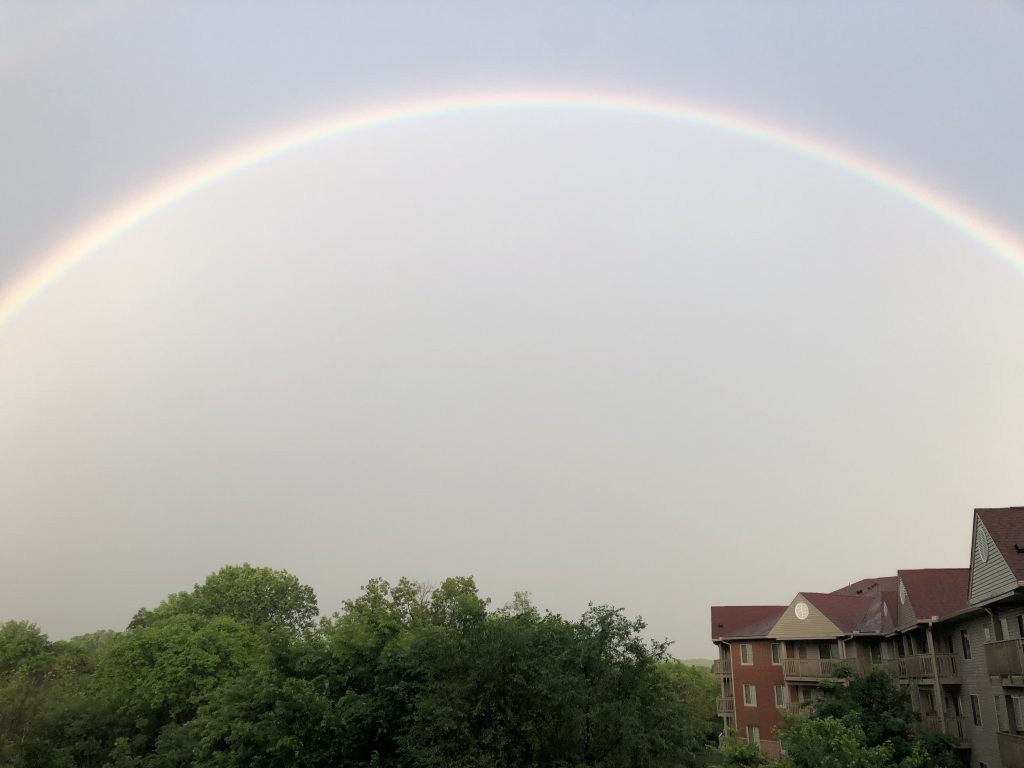
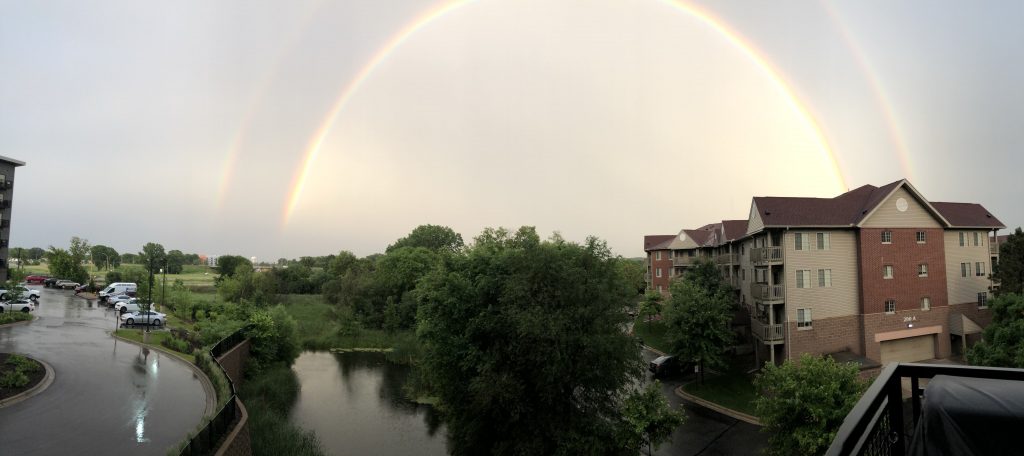
When it comes to perspective, perhaps nothing offers a more fitting case study than rainbows. For when it comes down to it, rainbows are (quite literally) in the eye of the beholder. In some way, rainbows are perhaps the closest thing we have to real magic. These vivid apparitions appear suddenly as if out of nowhere, shining brightly just as the rain clears and the sun begins to peak out from behind the clouds. The transition is swift and elusive: If you’re not in the right place at the right time, then you will most certainly miss it.
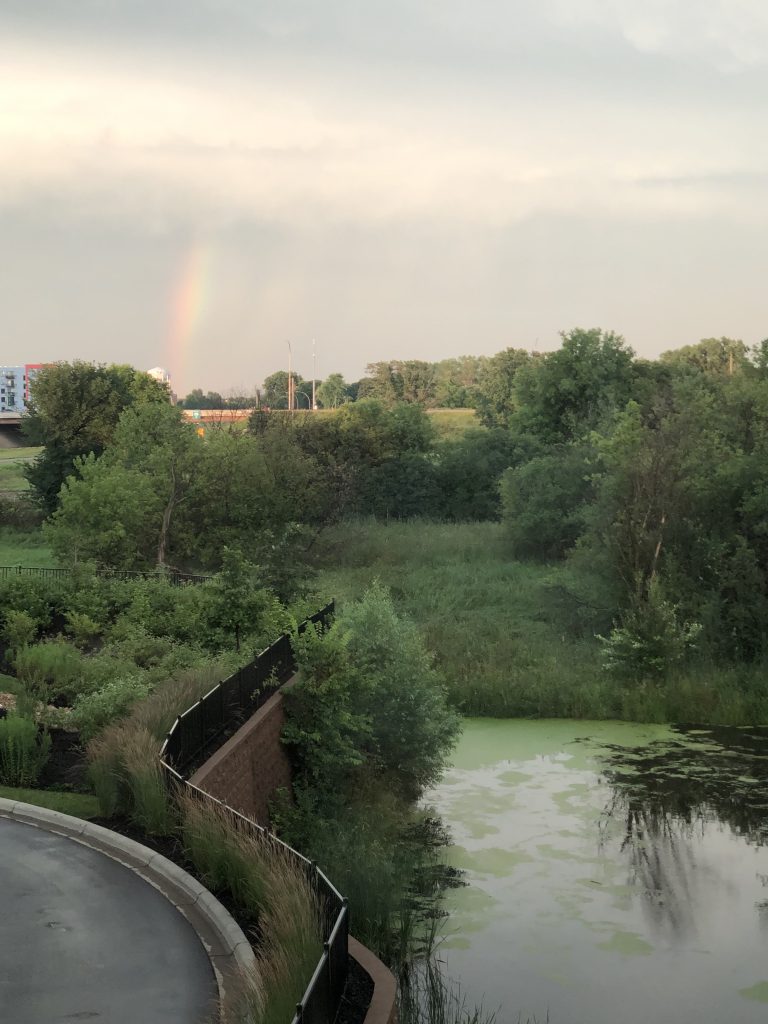
But the “magic” of rainbows only gets more powerful when you consider the science behind this incredible phenomenon. While sunlight appears white to the human eye, it is actually a compilation of many different colors of light. Red, orange, yellow, green, blue, indigo, violet: These colors make up the visible spectrum of light for humans. Certain materials—such as water—refract that light and allow it to separate into distinct wavelengths that determine color. The water vapor in air reflects, refracts, and disperses different colors of light all the time, but this usually occurs in so many different directions that it’s impossible to discern one distinct rainbow. After a rainstorm, however, more water droplets remain suspended in the air, and the subsequent sunlight usually comes from one direction, thus allowing a rainbow to make itself visible. Rainy afternoons with a few rays of hopeful light breaking through the dark clouds create the perfect conditions for rainbows to shine brightly and make themselves known.
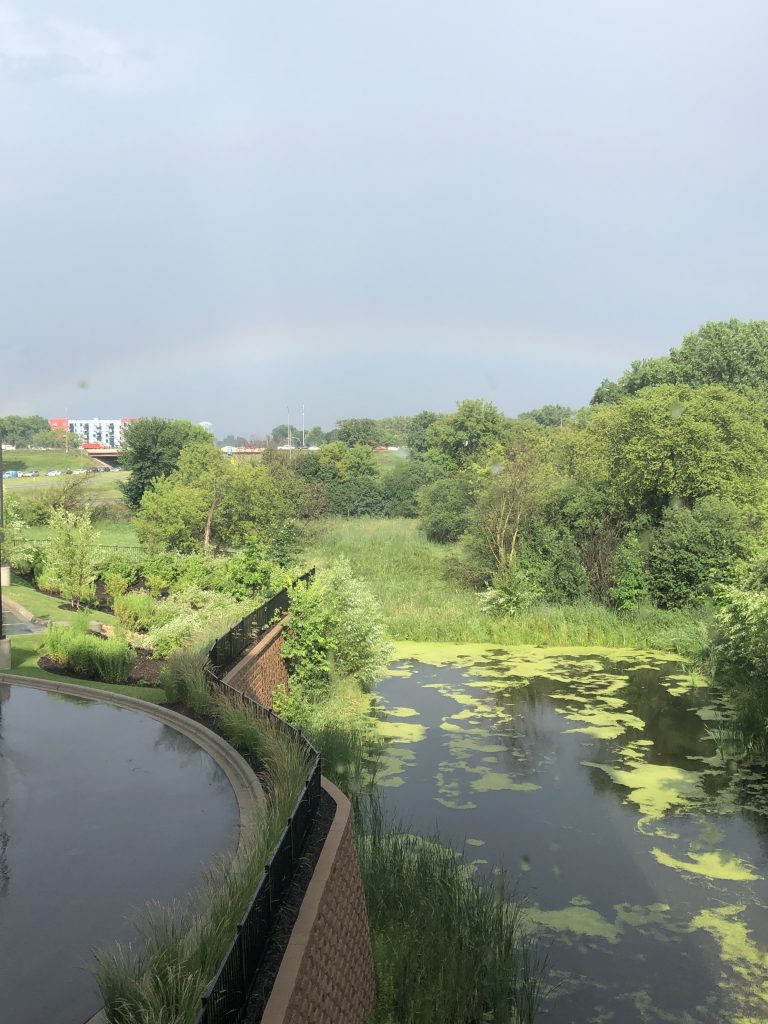
From where we stand, we can’t see things that are outside our field of vision, and yet we know they are there. This is related to perspective. There are a lot of things in the physics world that depend on your frame of reference—your angle of reference—and, in the case of optics, ambient light, meaning something that gives you the ability to see an object. Water refracts light, so when you view something under water, the image of what you see appears in a different spot from where that object actually is. Similarly, in all optics problems the image and the object are rarely in the same position as perceived through some medium. In the case of rainbows, the sun is the “object”—it makes rays that go through the water droplets and forms and an image that allows us to look through the water. That image is the rainbow. In other words, a rainbow is actually a manifestation of the sun distorted through water: The rainbow itself doesn’t actually exist and is ultimately the product of light magic. In this way, rainbows notably take something that we can’t otherwise look at—the sun—and make it possible to view (albeit in a distorted way) with the human eye. Pretty neat when contemplating the power of perspective, right?
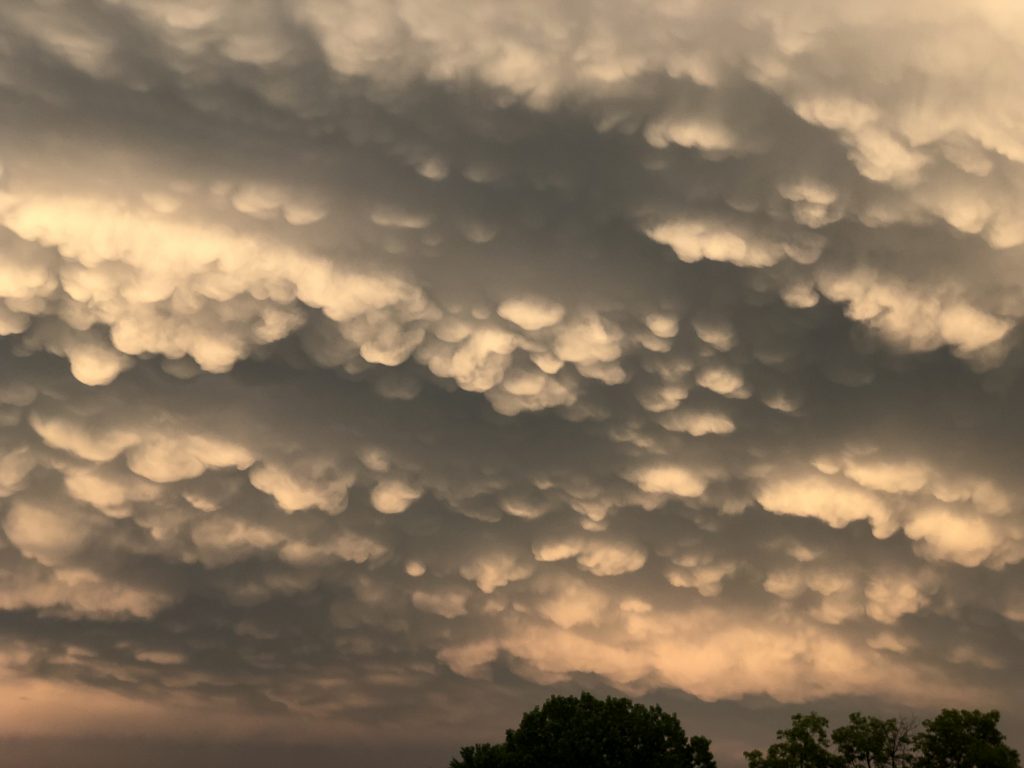
It is amazing to think that we can stand in one location and see an image from one particular perspective, but that someone elsewhere cannot see that same image unless they share our perspective. This phenomenon is also particularly applicable to rainbows because while you might be looking at a rainbow, someone else a mile south might not be able to view that same image due to how light refracts at that particular angle. All of optics is a game of angles: You have to be at the appropriate angle to view an image and form your perspective, and this inherently changes based on where you are standing. Therefore, at any given time only you have your distinct, unique perspective, and this ultimately determines what you perceive to be true. But, if and when you shift your position, a different set of truths suddenly begin to make themselves known to you. The effect is both shockingly liberating and inherently magical.
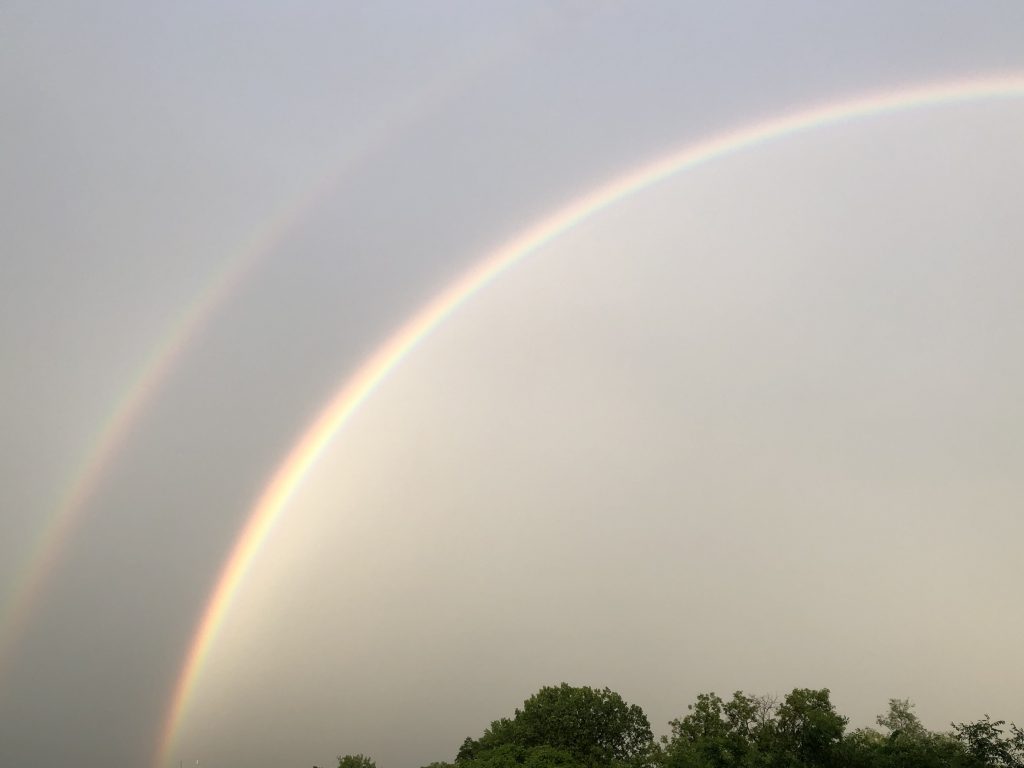
This is how I am choosing to spend 2020, with a deliberate focus on viewing the world from an angle that is realistic and full of possibility and then consciously switching up my perspective when that angle no longer serves me in a positive way. Note my word choice here: Choose. The decision is an intentional one. It takes effort. It takes sacrifice. It takes a mindful rewiring and a commitment to see the good amidst the bad, the beauty amidst the challenge, the calm amidst the storm.
Now, don’t be confused: This isn’t a naivety that, as the saying goes, life is “all sunshine and rainbows.” It isn’t an exercise in insanity or an attempt at limitless optimism, but rather an intentional practice in gratitude. It’s making the most of the cards you’re dealt and, in the process, recognizing that some of the cards you are holding aren’t actually half bad. It’s a decision not to fixate on what was or what could have been, but instead on what is. For while you may feel like a hundred and one things have gone wrong this year, a hundred and one things have also gone right for you to be here, breathing and alive in this present moment.
It’s easy to fixate on what’s missing or on what you think should have been. But this is also unhealthy and debilitating if done in excess. By contrast, it’s courageous to focus on what you do have and choose to be grateful for that which is good—for there is always something good. You might not always get it right, and that’s okay. Remember, anything worth having is difficult to obtain, and deciding to live this way takes careful practice, experimentation, and a willingness to bounce back from your mistakes. You will stumble, that is most certainly true; but instead of letting that stop you, choose to make it part of your dance.
So, next time you step outside, I challenge you to take a deep breath of the crisp, rainy autumn air and think not about what you wish was present in your life, but rather take a moment to celebrate all that is.
Choose to find your rainbow, even when it’s originally obscured from view.
Choose to search for a new angle and find your “indigo” perspective.
Choose to bring others along with you on this journey, so that they might see it, too.
Choose to live life in color: You won’t be disappointed.
[1] I don’t even really like tea…



Comments are closed.